TW: domestic violence, suicide
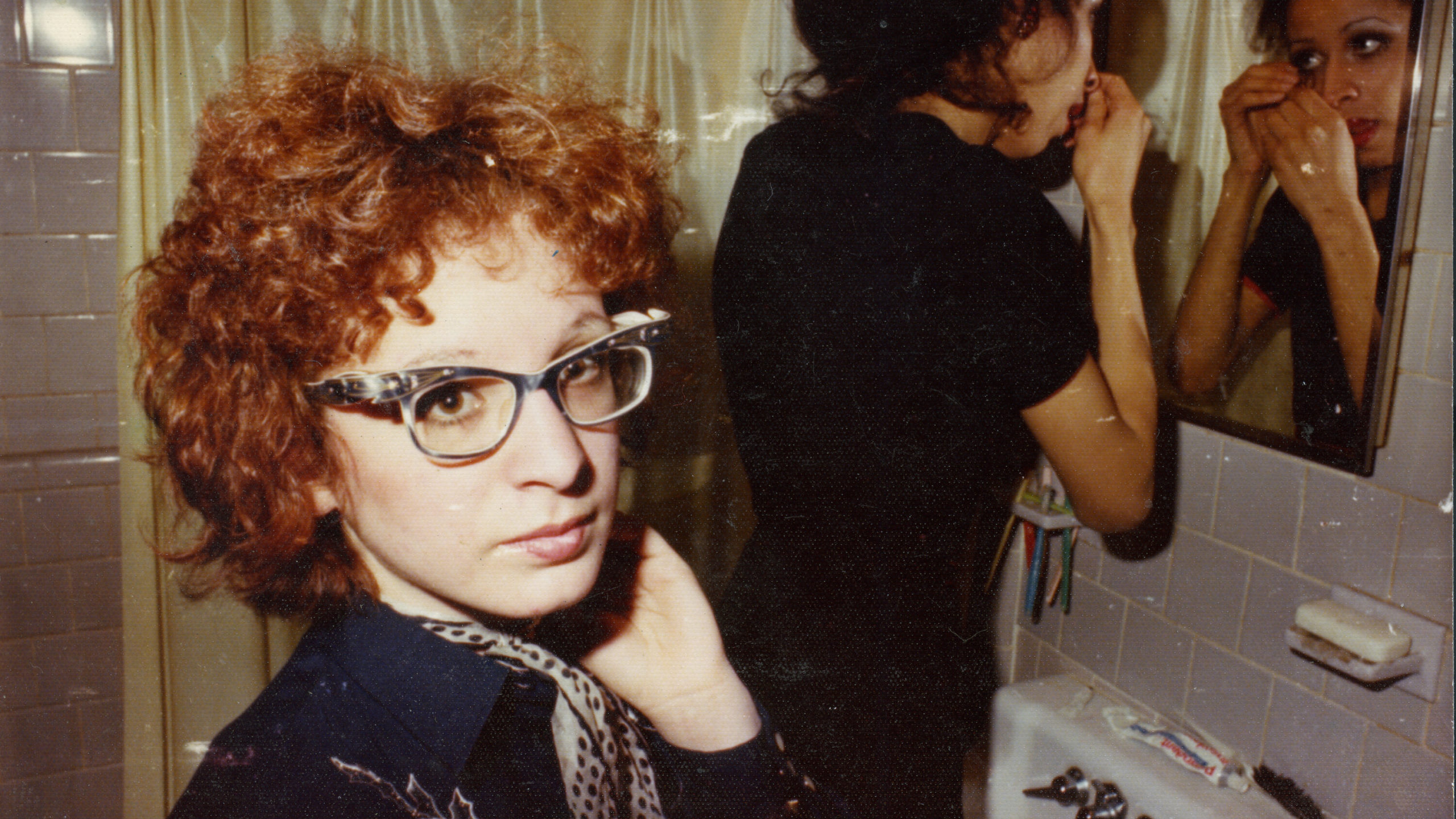
Recently, I read Patrick Radden Keefe’s extremely detailed and well-written book Empire of Pain: The Secret History of the Sackler Dynasty: an exploration of the Sackler family, their pharmaceutical company Purdue Pharma, and the harm that their drug OxyContin has caused (and continues to cause) to millions of people across America. Reading it, I thought a lot about the artist and activist Nan Goldin (Keefe mentions her a few times towards the end of the book). Earlier this year, I saw Laura Poitras’ documentary All the Beauty and the Bloodshed, which tells the story of Goldin’s life and work, including her activism in raising awareness of the Sacklers’ role in the opioid crisis. Throughout her career, Goldin has taken photographs of the world around her, and the marginalised groups and subcultures she has belonged to, to “make a record that nobody can revise” (Goldin, qtd. in Keefe 351). All the Beauty and the Bloodshed tells Goldin’s story through the medium of cinema and thus brings her work to a different, more mainstream audience; in doing so, it creates a counternarrative, much like Goldin’s work does.
The SAGE Encyclopedia of Qualitative Research Methods defines counternarratives as “stories/narratives that splinter widely accepted truths about people, cultures, and institutions as well as the value of those institutions and the knowledge produced by and within those cultural institutions” (n.p.). The aim of a counternarrative is to make visible those stories and perspectives which have been marginalised and hidden by the dominant narrative about a group of people. In All the Beauty and the Bloodshed, Goldin says, “You grow up being told, ‘That didn’t happen. You didn’t see that. You didn’t hear that.’ And when you do, how do you believe yourself? […] And then how do you show the world that you did experience that, that you did hear that? And so, that’s the reason I take pictures” (1:50:30-1:50:54). Both she and Poitras make visible the previously-hidden stories of women, queer people, sex workers, domestic violence victims, AIDS patients, and drug addicts, Goldin in her photography and Poitras in her film.
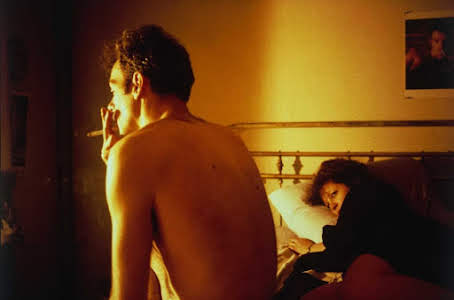
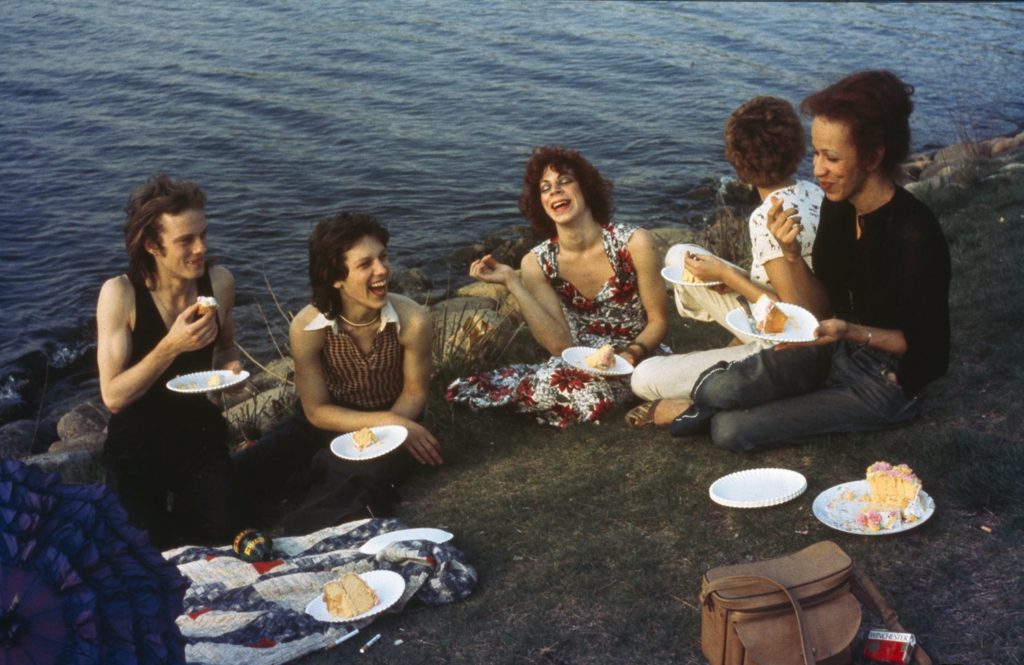
Goldin’s most famous work is her 1986 book of photographs The Ballad of Sexual Dependency. This book is a counternarrative – it grants subjectivity to the marginalised groups of people whose image it captures, such as members of the LGBTQ community. Depicting someone in a photograph, or on film, makes their presence and voice undeniable. This is crucial for a group such as the LGBTQ community, who had to fight hard to make their voices heard during this time in particular, when the AIDS epidemic was destroying the community. An especially radical aspect of The Ballad of Sexual Dependency is Goldin’s depiction of queer people as having agency and as enjoying life. Even today, few representations of queer people in media, and especially mainstream media, present them as happy.
Both All the Beauty and the Bloodshed and Empire of Pain reference Goldin’s most famous photograph, Nan One Month After Being Battered. In it, she stares unflinchingly into the camera with her face bruised and one eye bloody and swollen, after her boyfriend assaulted her. As Goldin stares into the camera, she stares out at the viewer of the photograph, challenging them not to look away, forcing them to properly see her and her pain, to empathise with her. This photograph is itself an excellent example of a counternarrative; Goldin makes herself visible, makes her voice (that of a domestic violence victim) clear, and makes her experience entirely undeniable. She places herself in a vulnerable position, but her skill and confidence in composing this photograph make it powerful and memorable.
Goldin’s dedication to documenting life as she saw it was greatly influenced by the suicide of her older sister Barbara when Goldin was eleven. The true nature of Barbara’s death was taboo in Goldin’s household; when the police arrived to inform the family of her death, Goldin heard her mother say, “Tell the children it was an accident” (Keefe 350). In 2004, Goldin created an art installation titled Sisters, Saints and Sibyls, which features video clips of train tracks (Barbara died by lying down on train tracks). Poitras shows some clips from this installation in the film, and it makes for a very powerful moment, especially since just before she inserts this footage into the film, she shows on screen excerpts from reports of psychiatric examinations of Barbara from some of the hospitals she was placed in. One of these reports contains the line, “she [Barbara] sees the future and all the beauty and the bloodshed” (1:47:20-1:47:26). This moment recontextualises the film’s title and thus, the documentary itself. It testifies to the importance of Barbara, and her life story, to Goldin’s career and body of work. Titling the film after a quote from Barbara gives her a voice, which her family ensured she did not have whilst she was alive.
In Empire of Pain, Keefe describes Goldin’s acceptance into the art world through the display of her photographs in art museums as “[t]he chronicler of life on the margins [becoming] canonical” (352). I wonder if Goldin aspired to become canonical in this way, or if her work is so transgressive and subversive that it cannot be contained within the strictures of the “canon”. Did the canon expand to include her radical art, or does the inclusion of her art in museums (a world often considered elitist) force the work to conform to a certain expectation of what art should be? Regardless of what the answer may be, Goldin has made full use of her canonical status. All the Beauty and the Bloodshed begins with a demonstration organised by Goldin’s activist group Prescription Addiction Intervention Now (PAIN), which advocates for the Sacklers to take responsibility for their role in the opioid epidemic. In May 2018, PAIN arrived at the Metropolitan Museum of Art, which has some of Goldin’s photographs in its permanent collection (Keefe 361). In the Sackler Wing, they threw pill bottles designed to look like OxyContin prescriptions into the reflecting pool and staged a die-in to protest the deaths from opioid overdoses of hundreds of thousands of Americans. Like Goldin, the Sacklers inhabit the art world, and the motivation for her protest at the Met was “to shame them, to ruin their reputation among their peers” (Goldin, qtd. in Schulman n.p.). Goldin’s use of her platform as a well-known and respected artist was effective. The Met eventually removed the Sackler name from seven of its galleries; in response, Goldin described the museum as “the only place they’re [the Sacklers] being held accountable” (All the Beauty and the Bloodshed 1:56:18-1:56:20). Goldin succeeded in countering the dominant narrative espoused by the Sacklers and maintained by Congress and the Justice Department. Both she and Poitras provide a counternarrative to the Sacklers’ insistence upon their innocence in the origins of the opioid epidemic and upon their belief that people addicted to OxyContin are “criminals”, who, by their own fault alone, “get themselves addicted over and over again” (Richard Sackler, qtd. in Keefe 257).
In 1989, Goldin curated an art exhibition about the AIDS epidemic titled Witnesses: Against Our Vanishing. I love this title. I think it’s a perfect description of what both Goldin and Poitras attempt and achieve in their art: preventing people and their stories from vanishing.
Works Cited:
All the Beauty and the Bloodshed. Directed by Laura Poitras. Neon, 2022.
“Counternarrative.” The SAGE Encyclopedia of Qualitative Research Methods. 2008.
Keefe, Patrick Radden. Empire of Pain: The Secret History of the Sackler Dynasty. Picador, 2021.
Schulman, Michael. “Nan Goldin Visits the De-Sacklered Met.” The New Yorker, 14 Nov. 2022, https://www.newyorker.com/magazine/2022/11/21/nan-goldin-visits-the-de-sacklered-met.
This was really interesting- have to go down a rabbit hole on counternarratives now I fear